The Gallery Collection
AI-generated art tested against the standards of a prestigious NYC gallery.
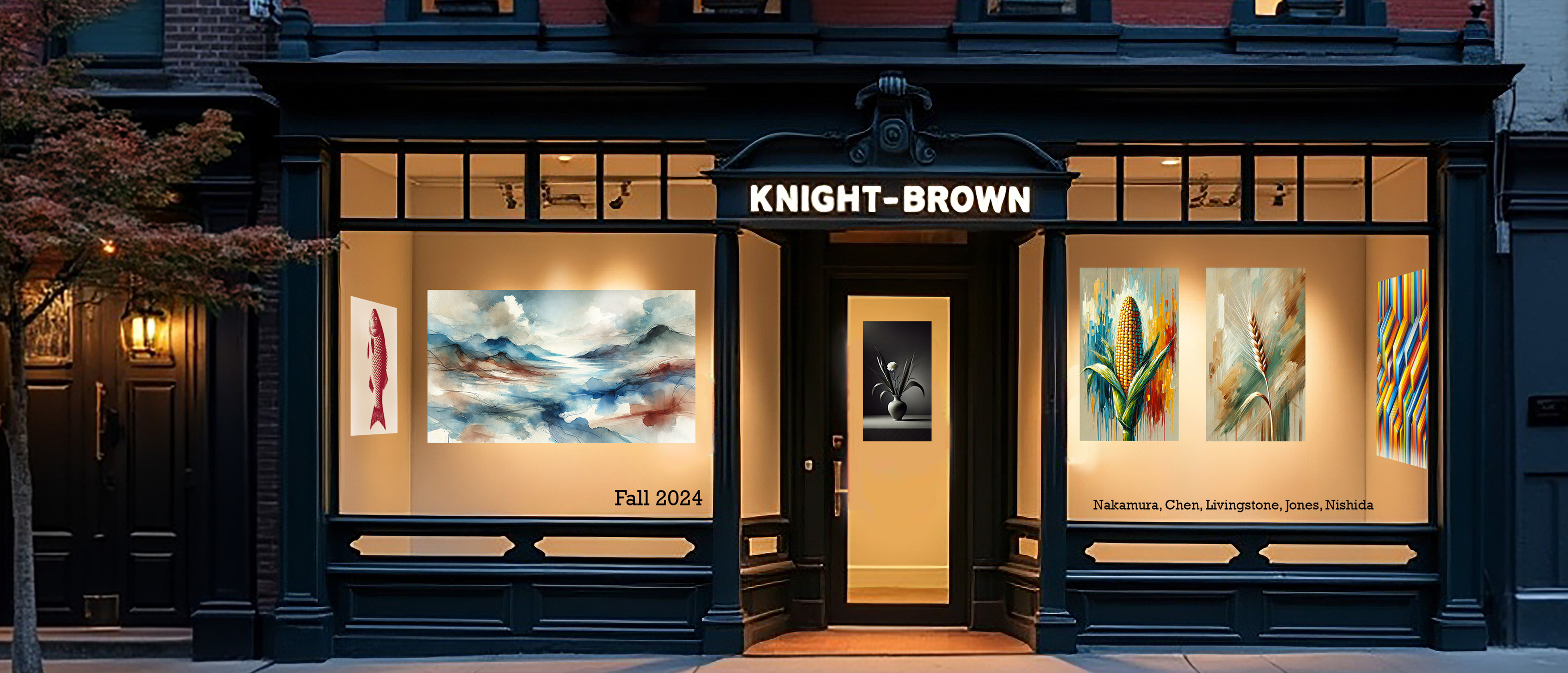
This project showcases the evolving capabilities of AI through art. Each product tests a different boundary. Whether AI can produce gallery-worthy images, realistic voices, animated characters, or a full-length book. The work spans from mid-2024 through 2026, a period of rapid advancement.
The art reflects contemporary standards. The images aren’t obvious AI products. The narratives in which they’re embedded are realistic. Fooling the viewer is considered a measure of success.
Methodology
Every project is conceived and directed by a person. There are no blank-slate requests at any level.
Several AI engines contribute to each product, chosen for their strengths: Gemini for visual art, Claude for narrative structure, ChatGPT for critique and refinement. The process is methodical. Each element goes through multiple rounds of human and AI interaction. The AI-generated text is then human-edited. Artwork is finished using traditional digital tools, primarily Photoshop with a Wacom tablet.
Each product is a collaboration between human direction and machine capability.
Point in Time
Each product represents the AI capabilities available when its creation began. This is a key premise.
The work was not retroactively enhanced as technology improved. Imperfections remain. That’s deliberate. Each shortcoming documents where AI had not yet developed sufficiently. These products are markers along a timeline.
Gallery Catalog
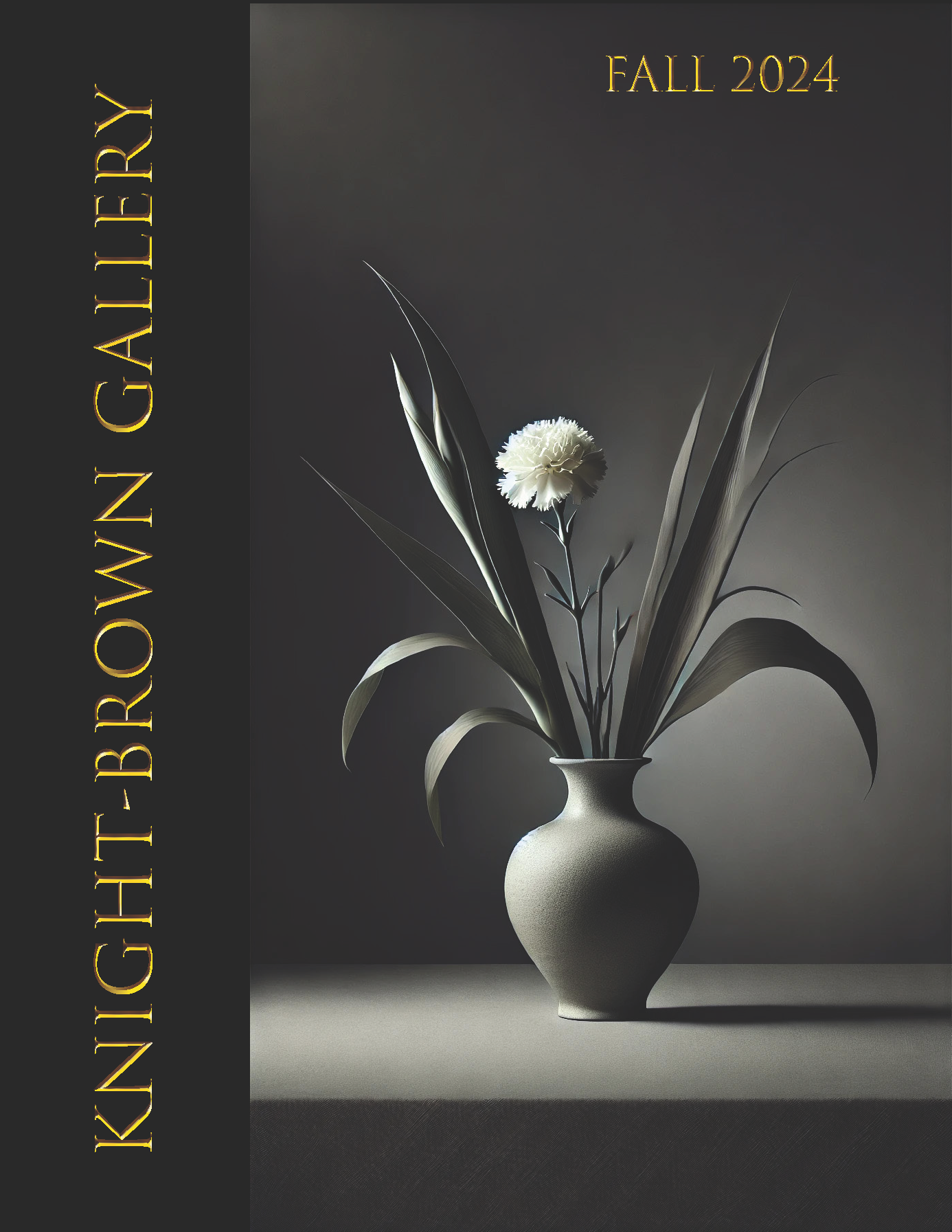
This is where it started. Could AI generate artwork that would be acceptable in a traditional gallery? A standard was needed. The test was whether the art could be shown in a prestigious bricks-and-mortar setting.
The fictitious Knight-Brown Gallery was born. Details were researched down to a precise location on Bleecker Street in New York City. A catalog for an upcoming fall show would be the vehicle. There wasn’t a reference catalog. This, too, was imagined.
Each element of the Fall Catalog was created to mimic a real gallery catalog. The five artists, their portraits, and their stories are collaborative creations. The artwork was not derivative. No photos or drawings were supplied as source material. Each piece began with a text description and went through three or four rounds of iterative refinement. Nearly every piece was then finished in Photoshop with a Wacom tablet. Some, such as the gyotaku, took hours of handwork.
The important feature of the catalog is context. The viewer judges each piece as though it belongs inside a prestigious NYC gallery. That framing raises the bar.
Objective: Test whether AI can produce art that a person would hang in a living room or office.
Gallery Catalog Review
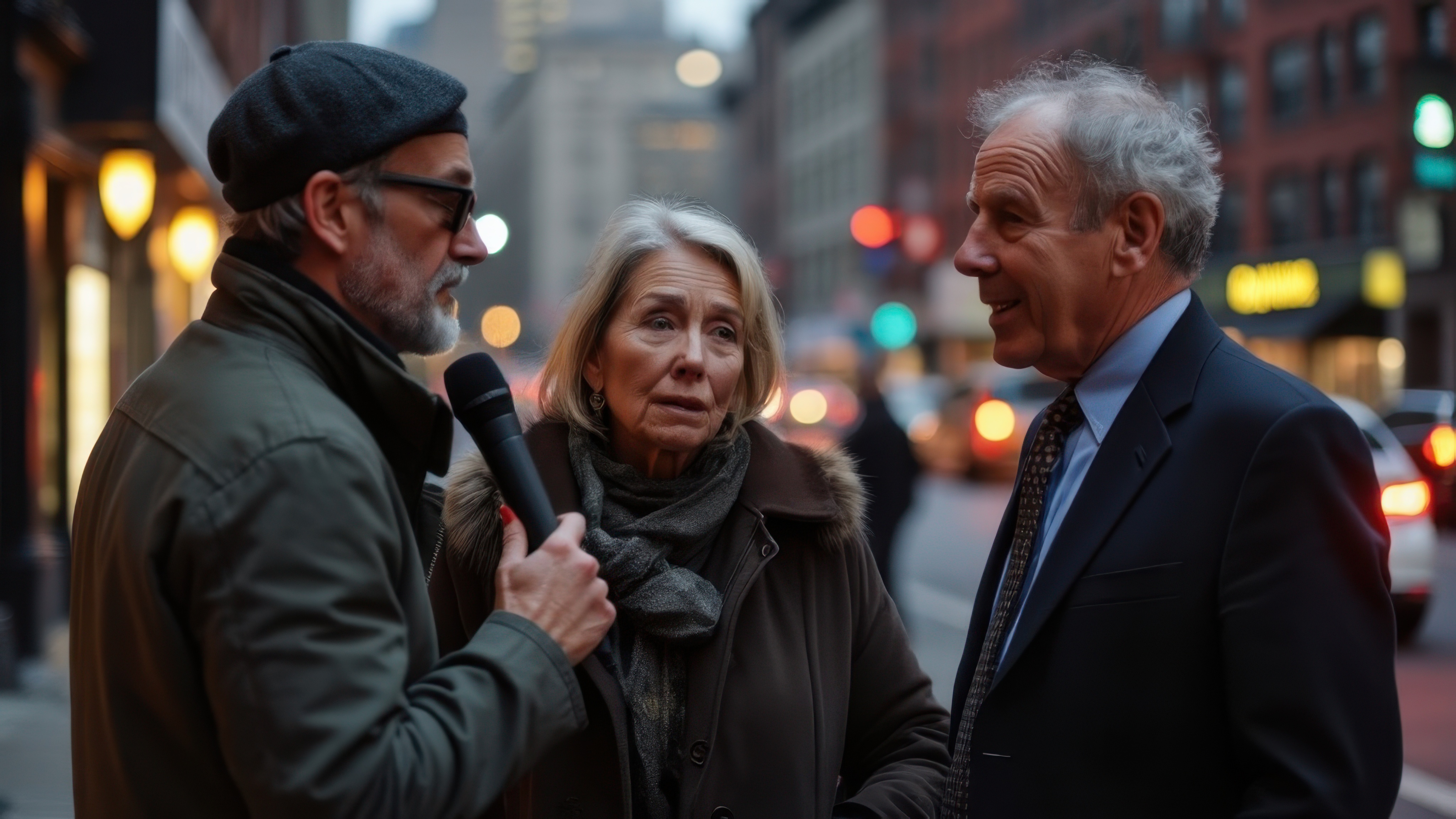
The Gallery Catalog raised a question. Could AI discuss what it had created? NotebookLM had recently introduced an automated way to summarize a document as a two-person conversation. The Gallery Catalog review needed a third person to introduce the two reviewers. That ruled out NotebookLM. Instead, the conversation was written using an LLM and fed to a text-to-speech engine. The dialog was developed in the same stepwise fashion as the artwork.
The premise was simple. Two art critics review the Gallery Catalog and give their opinions. The voices were generated by AI. This was another capability being tested.
The result is an audio podcast that sounds like a real conversation about real art.
Objective: Produce a realistic interview that accurately comments on an image-rich document.
Gallery Show Review
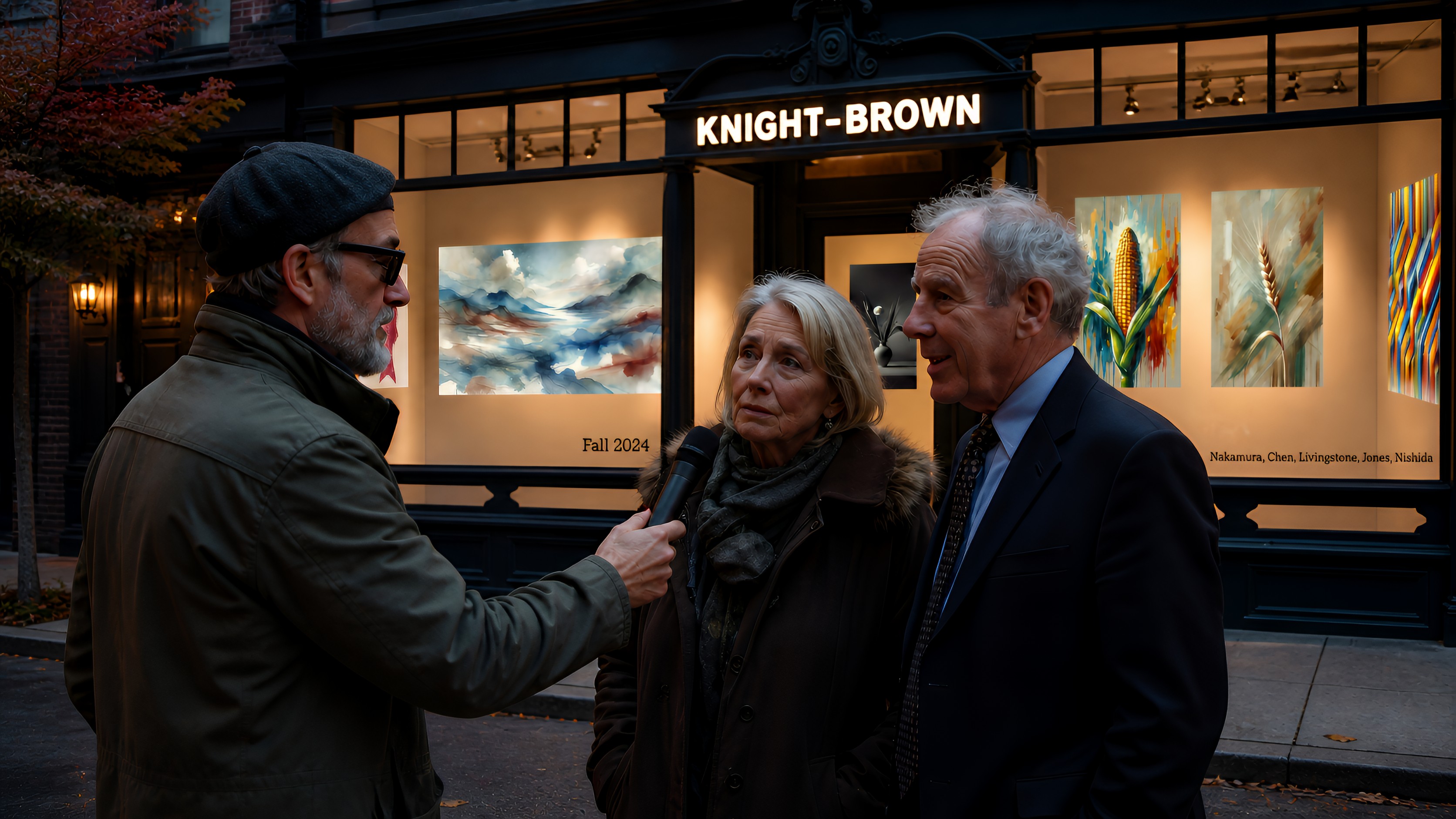
The audio podcast proved that AI-generated voices could carry a believable conversation. The next question was whether AI could bring the artists themselves into the discussion.
This podcast used the same basic approach as the Catalog Review. The review dialog was created by adding artist statements to the source material. This is as though the reviewers had attended an actual gallery show and spoken with the artists.
The product is a video. The artists appear as though they are speaking, although there is no dialog sync. That capability did not exist in the available software at the time. Video and audio segments were composed separately for the YouTube presentation.
Objective: Create animated characters from still images while retaining the appearance of the individuals.
Pilk Collection Auction
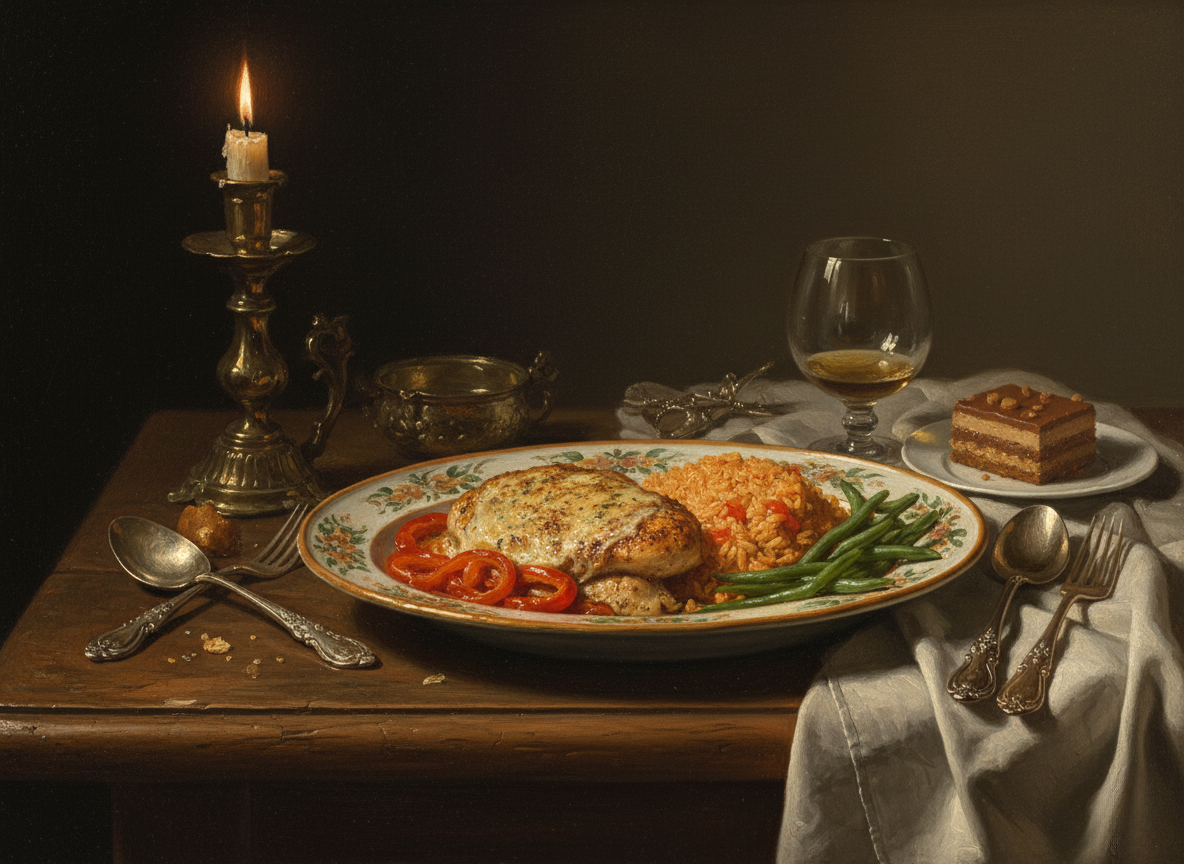
The Gallery Catalog tested AI-generated art. The Pilk Collection reversed the challenge. Could AI transform real photographs into convincing fine art?
The story centers on Professor H. H. Pilk, an eccentric collector who has amassed a collection of old still life paintings. The theme is food. Not the raw ingredients of Golden Age art, but prepared food. The images are based on photographs of real dishes that AI has placed into settings that mimic the style of the Old Masters. The food itself is unchanged from the original photograph.
As with the Gallery Catalog, presenting the images in the context of a gallery event with a realistic auction catalog pushes the viewer to judge each piece on its own qualities.
Objective: Test the ability to combine photographic content with AI-generated conceptual art.
Orbits
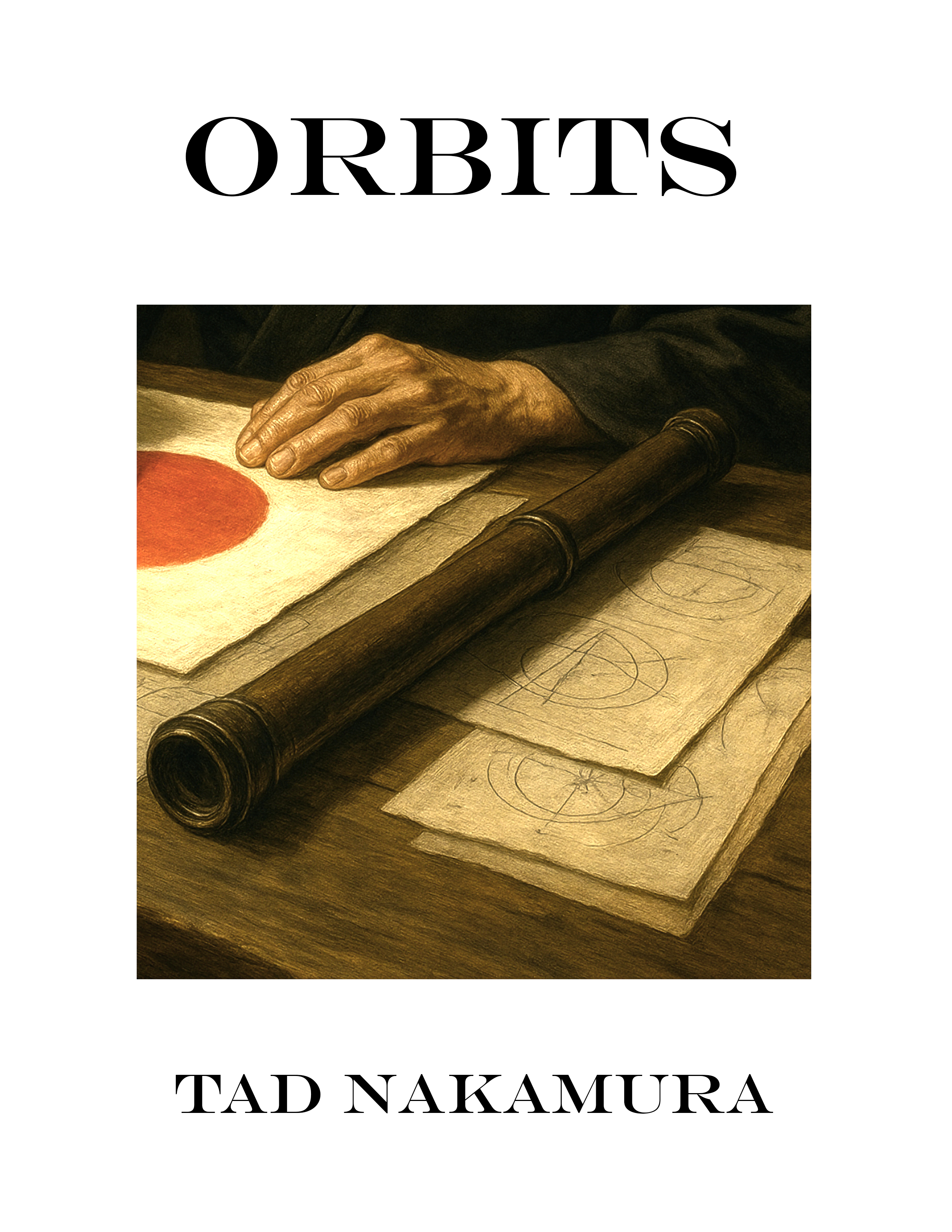
Each previous project tested a specific capability. Orbits combined them all into a single challenge. Could AI sustain a complex, emotionally coherent narrative across an entire book?
Tad Nakamura, one of the artists from the Gallery Catalog, steps out of the catalog and into his own story. He is a Japanese street artist spending a year on the road to prove to his father, and to himself, that he is a real artist.
Tad travels to Los Angeles, Washington DC, Utrecht, London, Paris, and Italy. Each city presents new challenges as he interprets what he sees through the lens of his Japanese culture. The story draws on real travels and real places. Photographs served as the basis for most of the images. The narrative reflects what was actually seen and felt in those locations.
The writing itself was a sustained collaboration. A book-length text required maintaining character consistency, emotional arc, and cultural nuance across many sessions. This was the longest and most demanding test of cooperative human-AI writing in the project.
Objective: Expand the range of AI-generated art while testing the ability of human-AI collaboration to produce a long, complex narrative.
Book Signing
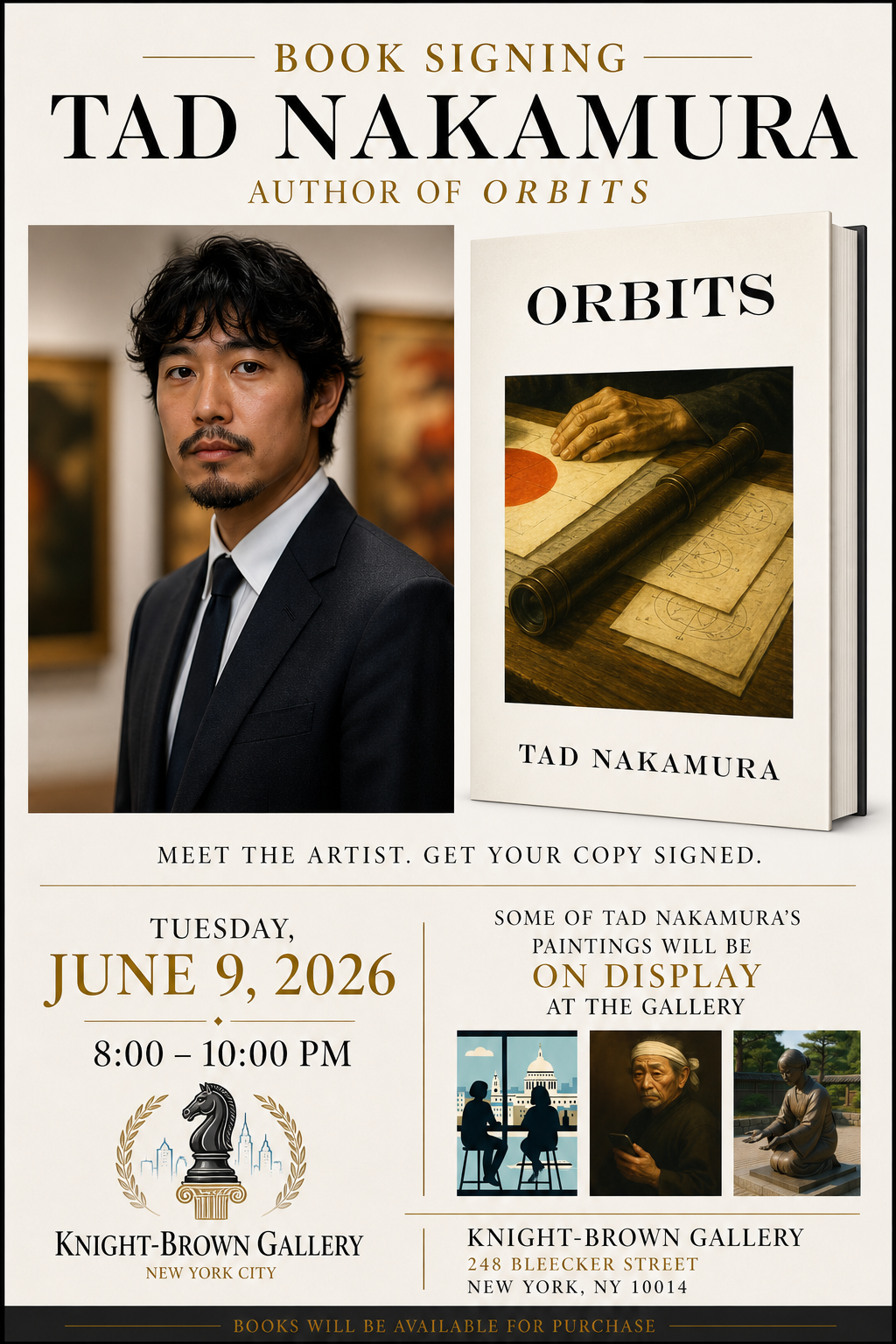
Under development. This section will feature video with lip-synced dialog, a capability that was not available when the earlier products were created.